
Contouring and highlighting are the secret weapons of professional makeup artists, and when done correctly, they can transform your face by enhancing your natural features. Whether you want to define your cheekbones, slim your nose, or create a radiant glow, mastering these techniques can elevate your makeup game. This blog will guide you through essential contouring and highlighting tips, product recommendations, and application tricks to help you achieve a flawless, sculpted look.
Understanding Contouring
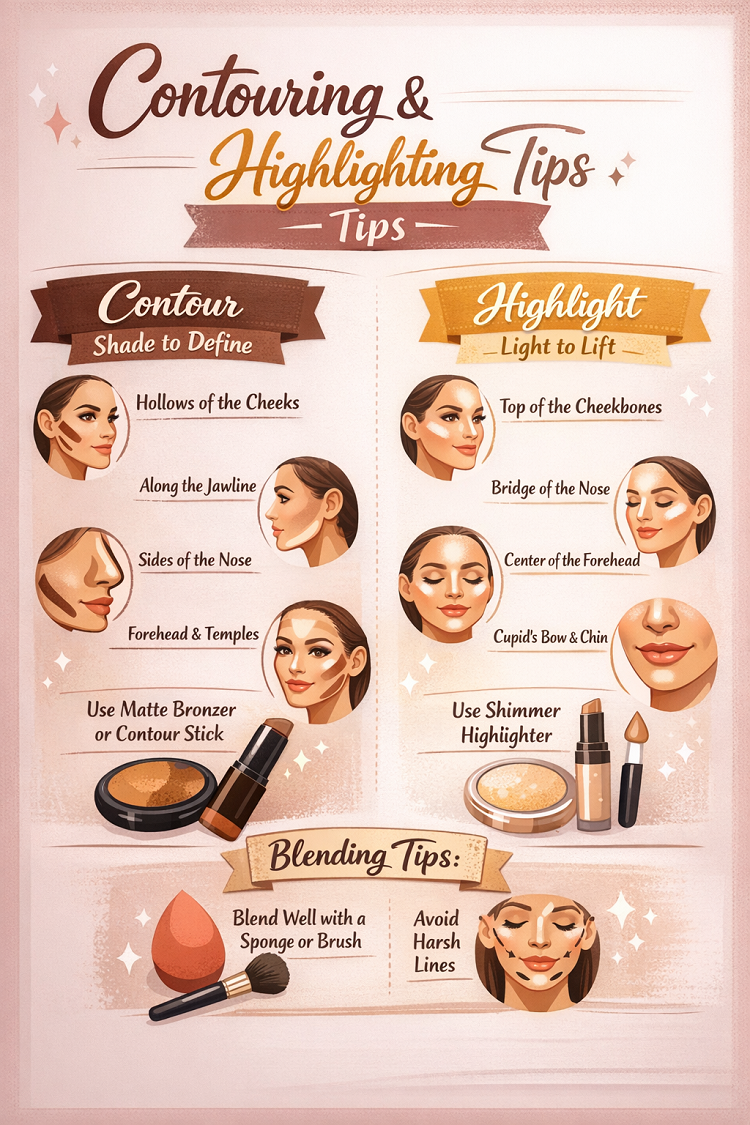
Contouring involves using a shade darker than your skin tone to create shadows and define certain areas of your face. The key is to enhance your natural bone structure rather than drastically changing it. Common areas to contour include:
-
Cheekbones: Apply a matte contour powder or cream just below your cheekbones to make them appear higher and more defined.
-
Jawline: Contouring along the jawline can give a sharper, more sculpted appearance.
-
Nose: A subtle contour along the sides of the nose can create the illusion of a slimmer shape.
-
Forehead: Contouring along the hairline can balance facial proportions.
Tip: Blend, blend, and blend! Harsh lines are the biggest mistake beginners make. Use a fluffy brush or a damp beauty sponge to achieve seamless shadows.
Highlighting for Radiance
Highlighting, on the other hand, brings light to the high points of your face, creating a luminous and youthful appearance. Apply highlighter to areas where light naturally hits:
-
Top of cheekbones: Gives your cheeks a lifted effect.
-
Bridge of the nose: Makes your nose appear straighter.
-
Cupid’s bow: Enhances the shape of your lips.
-
Brow bone: Opens up the eyes and accentuates the brows.
-
Center of the forehead and chin: Adds dimension and balance.
Tip: Choose a highlighter that complements your skin tone. Champagne shades work beautifully on fair to medium skin, golden tones suit warm complexions, and rose gold is perfect for deeper skin tones.
Choosing the Right Products
Contouring and highlighting products come in creams, powders, and sticks. Each has its benefits:
-
Powder: Great for oily skin and buildable application.
-
Cream: Offers a dewy, natural finish and blends seamlessly.
-
Stick: Convenient for quick application and on-the-go touch-ups.
Techniques for Beginners
-
Start subtle: It’s easier to build intensity than to remove excess product.
-
Use proper brushes/sponges: Angled brushes for contour, fan brushes for powder highlighter, and damp beauty sponges for cream products.
-
Blend strategically: Always blend upwards and outward to mimic natural light and shadows.
-
Set your makeup: Use a translucent setting powder or setting spray to lock your contour and highlight in place.
Common Mistakes to Avoid
-
Over-applying product leading to unnatural shadows or streaks.
-
Ignoring skin undertones when choosing shades.
-
Skipping blending, which can make contour and highlight look harsh.
-
Using overly shimmery highlighters for daytime or casual looks.
Final Thoughts
Contouring and highlighting are transformative tools in any makeup routine. With practice, the right products, and attention to blending, you can accentuate your best features and create a polished, professional look. Remember, makeup is meant to enhance your natural beauty, not mask it. Start with subtle shades, gradually experiment with intensity, and always consider your face shape and undertones. By mastering these techniques, you can achieve a flawless, radiant, and confident look every day.

Pingback: Benefits of Essential Oils - Trends With US